









WHAT IS GOOGLE ADS MANAGEMENT AND WHAT DOES IT INVOLVE?
Paid Search That Is Built to Convert, Not Just to Click
Google Ads places your business at the top of search results for specific terms, paying only when someone clicks. When campaigns are properly structured, that means immediate visibility for high-intent searches with full control over spend. When they are not, the budget disappears fast. The work covers the full campaign lifecycle:
New campaign builds
Clean structure from the start—ad groups separated by intent and service area, strategic keyword match types, and negative keywords in place before a single pound or dollar is spent.
Existing campaign audits
Underperforming campaigns assessed and restructured where the current setup is creating inefficiency or attracting poor-quality traffic.
Landing page alignment
An ad that accurately represents your offer needs a landing page that delivers on it. Where pages are not fit for purpose, this is addressed as part of the management work.
Ongoing optimisation
Bids, keywords, and ad copy reviewed and refined continuously to maintain and improve performance over time.
This service is a strong fit if you:
- Want qualified enquiries in the short term while SEO builds longer-term visibility
- Have run Google Ads before but found results unpredictable or hard to assess
- Are spending on ads but not confident the campaigns are structured correctly
- Want a specialist to take full ownership rather than managing it internally
THE PROCESS
What to Expect From Google Ads Management
Campaign strategy
Target keywords, audience intent, campaign structure, budget allocation, and conversion goals agreed before any spend begins.
Campaign build
Clean, logical structure with ad groups separated by service area and search intent for accurate performance assessment.
Ad copy
Written to be directly relevant to the search terms targeted, clearly communicating your offer and directing prospects to the right landing page.
Landing page alignment
Pages assessed and improved to match ad intent and convert traffic into enquiries.
Negative keyword management
Built and maintained from the outset to prevent budget being consumed by irrelevant searches.
Ongoing optimisation
Bids, keywords, and ad copy adjusted regularly based on live performance data.
Reporting
Plain-language updates covering spend, clicks, conversions, and cost per enquiry so you always know what your budget is producing.
How Google Ads Management May Help Your Business
Immediate visibility for high-intent searches
Your business appears at the top of results at the moment prospects are most ready to act.
Clear, measurable data
A well-structured campaign shows exactly what is and is not working, allowing spend to be directed toward what produces results.
Complements your SEO activity
Paid search generates enquiries in the short term while organic visibility builds; data from campaigns also informs keyword and content decisions in SEO.
Reduced wasted spend
Improved targeting precision and landing page relevance means more of your budget reaches genuine prospects.
Flexibility to scale
Campaigns can be adjusted quickly in response to business changes, seasonal demand, or shifts in competitor activity.
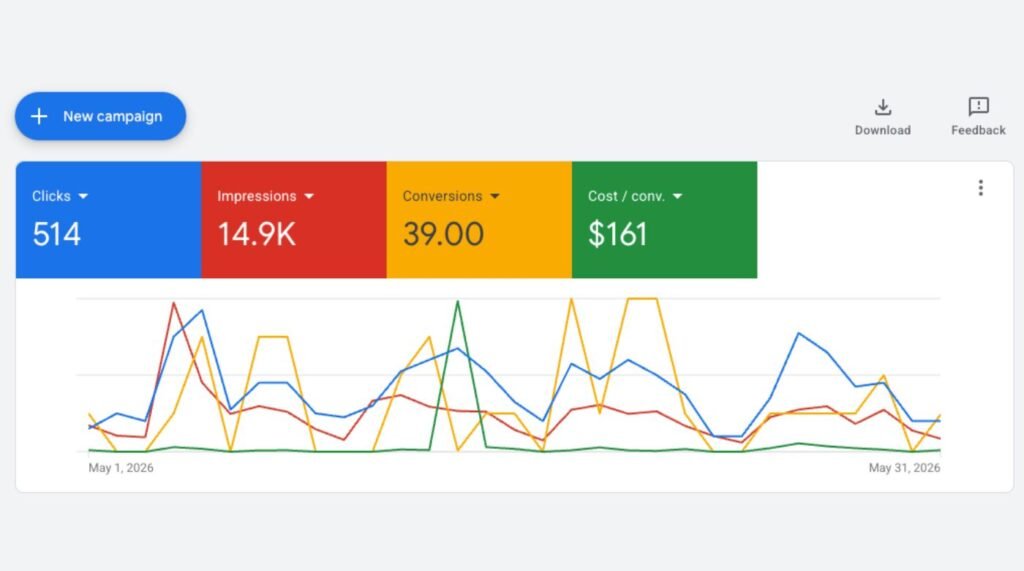
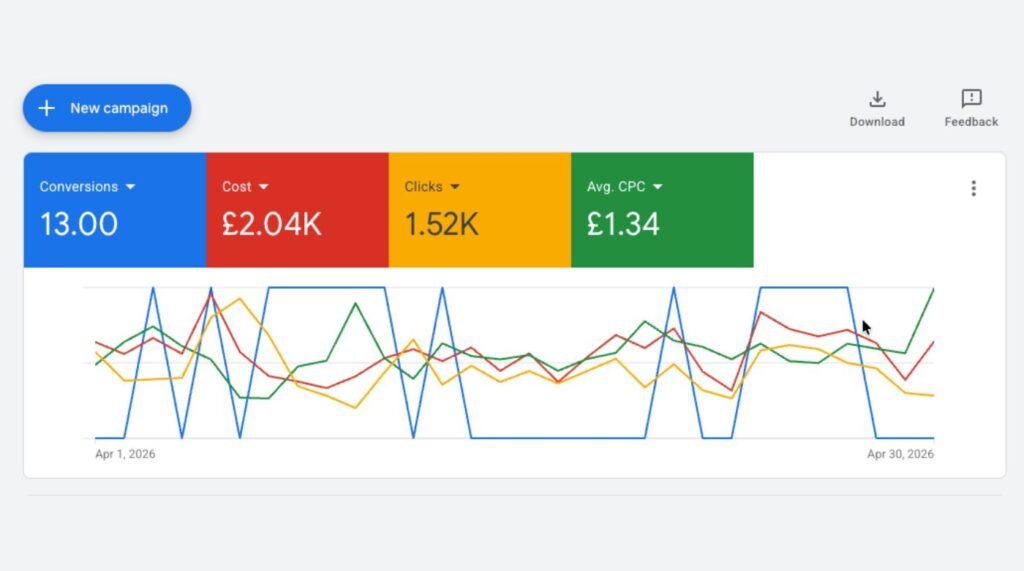
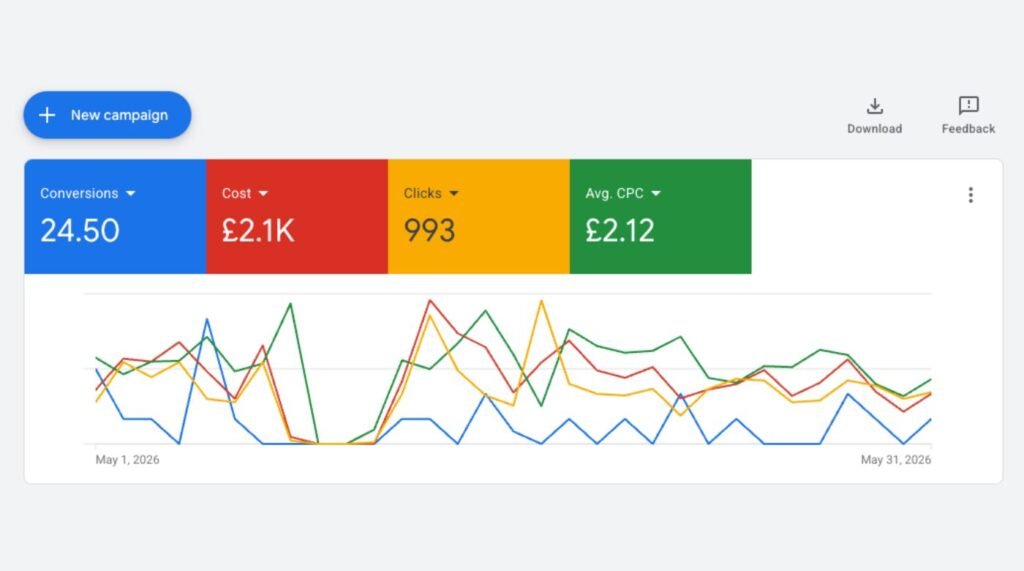
Work That Speaks for Itself
A Sample of What a Structured Approach Looks Like in Practice
WHY WORK WITH ME
Google Ads Managed as Part of a Broader Strategy
Because I also work across SEO and web design, keyword data from paid campaigns informs organic strategy, landing page improvements are made with conversion and SEO in mind, and the overall acquisition approach is treated as one connected system—not managed in silos.
Every campaign is managed directly by me. No outsourcing of setup, optimisation, or reporting. You have direct access at all times, and every decision is explained clearly.

Common Questions About Google Ads Management
How much does it cost to run Google Ads?
Google Ads operates on a pay-per-click model—you pay each time someone clicks your ad. Cost per click varies by industry, keyword competitiveness, and geography. A management fee applies separately for strategy, setup, optimisation, and reporting. A realistic budget and expected return will be discussed clearly before any work begins.
How quickly can I see results?
Unlike SEO, Google Ads can produce results within the first few weeks of going live. The early phase is also a learning period where data is gathered and the campaign refined. Consistent, meaningful results typically develop over the first one to two months as targeting and bidding are optimised.
What is a quality score and why does it matter?
Quality score is Google’s measure of how relevant your ads, keywords, and landing pages are to the people seeing them. A higher score means better ad positions at a lower cost per click. It is why landing page alignment and ad copy relevance are treated as priorities, not secondary considerations.
Can Google Ads work alongside my SEO activity?
Yes—and running both together is often the most effective approach. Paid search provides immediate presence while SEO builds sustainable visibility over time. When managed with alignment in mind, data from paid campaigns informs SEO decisions and strong organic rankings reduce dependence on paid search as visibility grows.
What happens if campaigns are not performing well?
Underperforming campaigns are assessed systematically—keyword targeting, bidding strategy, ad copy, and landing page quality are all reviewed. Changes are made in a structured way with clear reasoning, and performance is monitored closely after any significant adjustment. If fundamental restructuring is needed, that is communicated honestly with a clear explanation of what needs to change and why.
GET STARTED
Ready to Make Your Google Ads Budget Work Harder?
If your current campaigns are not producing the enquiries your business needs—or previous experiences with paid search have been unpredictable—a direct conversation is the most useful first step. A clear assessment of what has not worked and what a properly structured campaign could achieve takes the guesswork out of the decision.